|
|
| MOQ: | 5 kg/kgs |
| Price: | $0.09 - $10.00/ Piece |
| Standard Packaging: | Pallets |
| Delivery Period: | It depends on the quantity to be ordered. |
| Payment Method: | By T/T or L/C |
| Supply Capacity: | 10000 Tons Per Year |
Custom aluminum components can begin with a cast shape or a suitable wrought product before their functional surfaces are machined. This listing brings together the original low-pressure, sand and investment-casting scope and the named A356, 6061 and 6063 materials. The practical starting point is to match the material form to the part, then define the manufacturing route.
Casting creates the initial component geometry in a mould. Machining establishes selected finished surfaces and dimensions by removing material. For a part with a substantial body and several precise interfaces, these stages serve different purposes: the casting supplies the general shape, while the drawing identifies the features that need further work.
Sand casting uses a shaped sand mould, whereas investment casting uses an expendable pattern to form a ceramic mould. Low-pressure filling is a method of introducing metal into a mould. These terms describe different process elements, so the quotation needs to identify the actual route proposed for the component.
A356 is an aluminum casting alloy used in applications that call for a cast starting shape. In contrast, 6061 and 6063 are normally specified as wrought alloys, such as stock or extruded products. A casting design should therefore identify its casting grade explicitly; the three material names are not interchangeable process instructions.
Where the requirement is a machined 6061 or 6063 component, the starting product form is part of the specification. Where it is an A356 casting with subsequent machining, the casting drawing and finished-part drawing should describe the relationship between those stages.
For cast designs, mark the intended walls, internal spaces and surfaces requiring additional machining. For machined features, identify reference datums and the bores, mounting faces or holes that determine assembly. A drawing that separates these requirements makes the supplier quotation more specific.
Typical design discussions include equipment bodies, custom covers and mounting components. These examples illustrate the category rather than certify suitability for a particular installation. Loads, service conditions and acceptance requirements are reviewed for the requested part.
Tooling and sample approval may be relevant to a casting project, while stock form and machining scope may dominate a wrought-part enquiry. Describe which supply stage is required and whether an existing drawing or sample is the controlling reference.
Record the selected alloy, process and finished dimensions together. That creates a consistent basis for comparing quotes and ordering the same component again.
| Parameter | Product specification |
|---|---|
| Listed materials | A356 / 6061 / 6063, selected individually |
| Casting scope | Low-pressure, sand or investment-casting enquiry; route reviewed per design |
| Starting form | Casting or wrought stock/profile matched to the alloy |
| Component geometry | Custom drawing or approved part definition |
| Secondary machining | Specified faces, bores, holes and mating features |
| Delivery condition | Material-specific condition stated in the order |
| Surface requirements | Defined cast, machined and finished areas |
| Acceptance reference | Approved material, process and finished-part specification |
Connect the material, the manufacturing route and the finished drawing. Share your aluminum component project with EB Castings for a clearly scoped quotation.
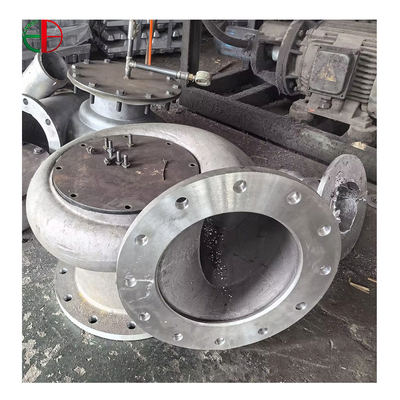
Photographs illustrate component examples; the supplied part follows the approved drawing and order specification.
![]()
![]()
![]()
![]()
|
|
| MOQ: | 5 kg/kgs |
| Price: | $0.09 - $10.00/ Piece |
| Standard Packaging: | Pallets |
| Delivery Period: | It depends on the quantity to be ordered. |
| Payment Method: | By T/T or L/C |
| Supply Capacity: | 10000 Tons Per Year |
Custom aluminum components can begin with a cast shape or a suitable wrought product before their functional surfaces are machined. This listing brings together the original low-pressure, sand and investment-casting scope and the named A356, 6061 and 6063 materials. The practical starting point is to match the material form to the part, then define the manufacturing route.
Casting creates the initial component geometry in a mould. Machining establishes selected finished surfaces and dimensions by removing material. For a part with a substantial body and several precise interfaces, these stages serve different purposes: the casting supplies the general shape, while the drawing identifies the features that need further work.
Sand casting uses a shaped sand mould, whereas investment casting uses an expendable pattern to form a ceramic mould. Low-pressure filling is a method of introducing metal into a mould. These terms describe different process elements, so the quotation needs to identify the actual route proposed for the component.
A356 is an aluminum casting alloy used in applications that call for a cast starting shape. In contrast, 6061 and 6063 are normally specified as wrought alloys, such as stock or extruded products. A casting design should therefore identify its casting grade explicitly; the three material names are not interchangeable process instructions.
Where the requirement is a machined 6061 or 6063 component, the starting product form is part of the specification. Where it is an A356 casting with subsequent machining, the casting drawing and finished-part drawing should describe the relationship between those stages.
For cast designs, mark the intended walls, internal spaces and surfaces requiring additional machining. For machined features, identify reference datums and the bores, mounting faces or holes that determine assembly. A drawing that separates these requirements makes the supplier quotation more specific.
Typical design discussions include equipment bodies, custom covers and mounting components. These examples illustrate the category rather than certify suitability for a particular installation. Loads, service conditions and acceptance requirements are reviewed for the requested part.
Tooling and sample approval may be relevant to a casting project, while stock form and machining scope may dominate a wrought-part enquiry. Describe which supply stage is required and whether an existing drawing or sample is the controlling reference.
Record the selected alloy, process and finished dimensions together. That creates a consistent basis for comparing quotes and ordering the same component again.
| Parameter | Product specification |
|---|---|
| Listed materials | A356 / 6061 / 6063, selected individually |
| Casting scope | Low-pressure, sand or investment-casting enquiry; route reviewed per design |
| Starting form | Casting or wrought stock/profile matched to the alloy |
| Component geometry | Custom drawing or approved part definition |
| Secondary machining | Specified faces, bores, holes and mating features |
| Delivery condition | Material-specific condition stated in the order |
| Surface requirements | Defined cast, machined and finished areas |
| Acceptance reference | Approved material, process and finished-part specification |
Connect the material, the manufacturing route and the finished drawing. Share your aluminum component project with EB Castings for a clearly scoped quotation.
Photographs illustrate component examples; the supplied part follows the approved drawing and order specification.
![]()
![]()
![]()
![]()