|
|
| MOQ: | 5 kg/kgs |
| Price: | $0.09 - $10.00/ Piece |
| Standard Packaging: | Pallets |
| Delivery Period: | It depends on the quantity to be ordered. |
| Payment Method: | By T/T or L/C |
| Supply Capacity: | 10000 Tons Per Year |
A finished aluminum component needs more than the correct shape. Material condition, surface protection and the way the part joins an assembly all affect the purchasing specification. This product covers custom parts in the listed ADC12, 6061, 6063 and 7075 grades, with the finish and delivery requirements defined for the selected alloy.
Alloy designation identifies the material family; delivery condition adds information about how that material is supplied. For heat-treatable wrought alloys such as 6061, 6063 and 7075, the specified temper is relevant to the engineering requirement. ADC12 is a die-casting alloy and should be reviewed through its own casting specification.
For the buyer, this means keeping the grade, product form and required condition together on the drawing or purchase specification. A material substitution should be assessed as an engineering change, not accepted solely because both products are described as aluminum.
Anodizing is a treatment that develops an oxide layer on aluminum. Its suitability and visual result depend on the alloy and the specified process. A decorative finish, a functional protective surface and an untreated mating area may have different acceptance needs on the same component.
Discuss the actual exposure: indoor handling, outdoor moisture, contact with other metals or cleaning chemicals can create different selection questions. The finish specification should identify the relevant surfaces, appearance reference and any defined environmental test. A photograph alone does not describe those requirements.
Surface treatment and dimensions should be considered together. A fitting bore, a threaded feature or a seating face may need masking or a dimension defined after treatment. Clearly identifying these locations helps align the machining drawing with the finishing instructions.
For visible components, agree how colour and texture will be assessed. For assembly features, identify the dimensions and fits that control function. Separating appearance acceptance from dimensional acceptance makes the finished product easier to specify and inspect.
A repeat order is easier to define when the drawing revision, alloy condition and finish designation remain linked. Retaining an approved appearance reference and identifying the critical interfaces gives future batches a more meaningful target than a general request for a durable surface.
For new enquiries, provide the intended environment alongside the drawing. This allows the quotation to address the finished component rather than an undefined raw part with an unspecified coating.
| Parameter | Product specification |
|---|---|
| Alloy options | ADC12, 6061, 6063 or 7075 |
| Material condition | Selected alloy and product-form specification |
| Main requirement | Custom component with defined finish and delivery condition |
| Treatment scope | Identified treated, masked and untreated areas |
| Appearance | Colour / texture reference where required |
| Dimensional basis | Before- or after-treatment dimensions explicitly identified |
| Corrosion testing | Test method and acceptance level only when specified |
| Order records | Drawing revision, material and finish requirements |
Specify the finish as carefully as the fit. Send EB Castings your component drawing and surface requirements for a quotation built around the finished part.
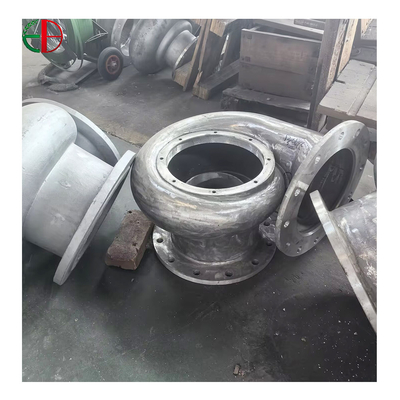
Photographs illustrate component examples; the supplied part follows the approved drawing and order specification.
![]()
![]()
![]()
![]()
|
|
| MOQ: | 5 kg/kgs |
| Price: | $0.09 - $10.00/ Piece |
| Standard Packaging: | Pallets |
| Delivery Period: | It depends on the quantity to be ordered. |
| Payment Method: | By T/T or L/C |
| Supply Capacity: | 10000 Tons Per Year |
A finished aluminum component needs more than the correct shape. Material condition, surface protection and the way the part joins an assembly all affect the purchasing specification. This product covers custom parts in the listed ADC12, 6061, 6063 and 7075 grades, with the finish and delivery requirements defined for the selected alloy.
Alloy designation identifies the material family; delivery condition adds information about how that material is supplied. For heat-treatable wrought alloys such as 6061, 6063 and 7075, the specified temper is relevant to the engineering requirement. ADC12 is a die-casting alloy and should be reviewed through its own casting specification.
For the buyer, this means keeping the grade, product form and required condition together on the drawing or purchase specification. A material substitution should be assessed as an engineering change, not accepted solely because both products are described as aluminum.
Anodizing is a treatment that develops an oxide layer on aluminum. Its suitability and visual result depend on the alloy and the specified process. A decorative finish, a functional protective surface and an untreated mating area may have different acceptance needs on the same component.
Discuss the actual exposure: indoor handling, outdoor moisture, contact with other metals or cleaning chemicals can create different selection questions. The finish specification should identify the relevant surfaces, appearance reference and any defined environmental test. A photograph alone does not describe those requirements.
Surface treatment and dimensions should be considered together. A fitting bore, a threaded feature or a seating face may need masking or a dimension defined after treatment. Clearly identifying these locations helps align the machining drawing with the finishing instructions.
For visible components, agree how colour and texture will be assessed. For assembly features, identify the dimensions and fits that control function. Separating appearance acceptance from dimensional acceptance makes the finished product easier to specify and inspect.
A repeat order is easier to define when the drawing revision, alloy condition and finish designation remain linked. Retaining an approved appearance reference and identifying the critical interfaces gives future batches a more meaningful target than a general request for a durable surface.
For new enquiries, provide the intended environment alongside the drawing. This allows the quotation to address the finished component rather than an undefined raw part with an unspecified coating.
| Parameter | Product specification |
|---|---|
| Alloy options | ADC12, 6061, 6063 or 7075 |
| Material condition | Selected alloy and product-form specification |
| Main requirement | Custom component with defined finish and delivery condition |
| Treatment scope | Identified treated, masked and untreated areas |
| Appearance | Colour / texture reference where required |
| Dimensional basis | Before- or after-treatment dimensions explicitly identified |
| Corrosion testing | Test method and acceptance level only when specified |
| Order records | Drawing revision, material and finish requirements |
Specify the finish as carefully as the fit. Send EB Castings your component drawing and surface requirements for a quotation built around the finished part.
Photographs illustrate component examples; the supplied part follows the approved drawing and order specification.
![]()
![]()
![]()
![]()