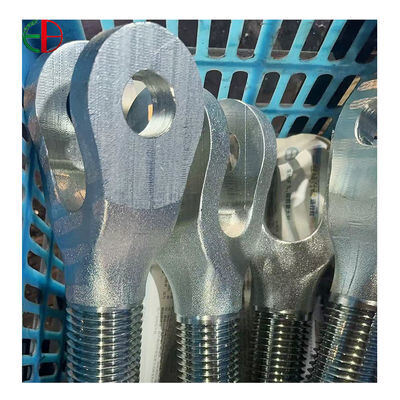
EB Castings forked rod reference photograph showing the clevis form and threaded shank. Connection dimensions are established by the approved part drawing.
Product Specifications
Product form: Forged fork-ended connecting rod
Material: 45 carbon structural steel
Connection features: Clevis end and externally threaded shank
Pin hole and fork gap: To mating pin and lug drawing
Thread size and pitch: To approved thread specification
Heat treatment: As specified for the ordered part
Surface condition: Finish and protection agreed with the order
Inspection focus: Fork alignment, hole position and thread fit
Forged Connection with Dual Interface Design
EB Castings supplies 45 steel forged clevis rods with threaded ends for drawing-based mechanical connections. The forked end provides space for a mating lug and pin, while the threaded shank connects to the corresponding threaded component. Bringing these two interfaces into one part makes the rod useful where a pinned connection must be combined with a specified screw connection.
The product is defined by its complete connection geometry: fork gap, ear thickness, pin-hole position, shank dimensions and thread details. These features should be considered as one assembly. A rod that fits the thread but does not provide the correct fork clearance cannot perform the intended connection function, even if its overall appearance resembles the original part.
45 Carbon Steel and Custom Processing
45 carbon structural steel is the material basis for this product. Its final mechanical properties depend on material condition, section size and the specified heat treatment. The order should identify the required delivery condition and any acceptance tests, so that material selection and processing are connected to the actual duty of the component.
Forging establishes the basic rod and fork form, followed by the finishing operations needed for the drawing. Pin holes, bearing faces and threads require particular attention because they interface directly with other components. Where a heat treatment is required, the manufacturing sequence needs to account for its effect on the final dimensions and surface condition.
Threaded End Specifications for Reliable Assembly
The thread specification should state its designation, pitch, direction, tolerance class and usable length. These details determine whether the rod will fit its mating component and provide the intended engagement. An external thread that looks correct in a photograph is not a substitute for a complete drawing callout, especially when replacing an older connection or working with equipment from different suppliers.
The transition between the threaded and unthreaded sections also belongs in the dimensional review. Shoulder positions, runout allowance and any wrenching features affect how the connection can be assembled and secured. If the assembly uses a separate locking component, its seating and clearance requirements should be considered with the rod rather than added after the part is manufactured.
Clevis Geometry and Movement Clearance
The inside fork gap must accommodate the mating lug, while the pin-hole diameter and position must correspond to the intended pin arrangement. Ear alignment, edge distances and the relationship between the pin axis and rod axis are important drawing features. Where movement is required at the joint, the surrounding parts need sufficient clearance throughout the intended travel.
Typical projects include replacement linkage rods and custom connecting hardware for mechanical assemblies. Application suitability depends on the complete joint design and service load. The selected pin, mating lug, thread engagement and retention arrangement all contribute to the connection; these should be reviewed together when specifying a new part or changing an existing design.
Quality Assurance and Inspection Guidelines
Useful inspection points include fork gap, hole alignment, thread fit, relevant lengths and any specified surface finish. Material and heat-treatment documentation can be identified in the order requirements. Clear acceptance criteria help connect the finished part to the assembly drawing and simplify incoming inspection before the rods enter production or maintenance stock.
Send EB Castings your drawing, thread designation, mating pin details and required quantity. For replacements, include the original part reference and photographs of the assembled connection. Choose a rod specified around the actual mating parts, with the fork and thread working together from the start.
EB Castings forked rod reference photograph showing the clevis form and threaded shank. Connection dimensions are established by the approved part drawing.
Product Specifications
Product form: Forged fork-ended connecting rod
Material: 45 carbon structural steel
Connection features: Clevis end and externally threaded shank
Pin hole and fork gap: To mating pin and lug drawing
Thread size and pitch: To approved thread specification
Heat treatment: As specified for the ordered part
Surface condition: Finish and protection agreed with the order
Inspection focus: Fork alignment, hole position and thread fit
Forged Connection with Dual Interface Design
EB Castings supplies 45 steel forged clevis rods with threaded ends for drawing-based mechanical connections. The forked end provides space for a mating lug and pin, while the threaded shank connects to the corresponding threaded component. Bringing these two interfaces into one part makes the rod useful where a pinned connection must be combined with a specified screw connection.
The product is defined by its complete connection geometry: fork gap, ear thickness, pin-hole position, shank dimensions and thread details. These features should be considered as one assembly. A rod that fits the thread but does not provide the correct fork clearance cannot perform the intended connection function, even if its overall appearance resembles the original part.
45 Carbon Steel and Custom Processing
45 carbon structural steel is the material basis for this product. Its final mechanical properties depend on material condition, section size and the specified heat treatment. The order should identify the required delivery condition and any acceptance tests, so that material selection and processing are connected to the actual duty of the component.
Forging establishes the basic rod and fork form, followed by the finishing operations needed for the drawing. Pin holes, bearing faces and threads require particular attention because they interface directly with other components. Where a heat treatment is required, the manufacturing sequence needs to account for its effect on the final dimensions and surface condition.
Threaded End Specifications for Reliable Assembly
The thread specification should state its designation, pitch, direction, tolerance class and usable length. These details determine whether the rod will fit its mating component and provide the intended engagement. An external thread that looks correct in a photograph is not a substitute for a complete drawing callout, especially when replacing an older connection or working with equipment from different suppliers.
The transition between the threaded and unthreaded sections also belongs in the dimensional review. Shoulder positions, runout allowance and any wrenching features affect how the connection can be assembled and secured. If the assembly uses a separate locking component, its seating and clearance requirements should be considered with the rod rather than added after the part is manufactured.
Clevis Geometry and Movement Clearance
The inside fork gap must accommodate the mating lug, while the pin-hole diameter and position must correspond to the intended pin arrangement. Ear alignment, edge distances and the relationship between the pin axis and rod axis are important drawing features. Where movement is required at the joint, the surrounding parts need sufficient clearance throughout the intended travel.
Typical projects include replacement linkage rods and custom connecting hardware for mechanical assemblies. Application suitability depends on the complete joint design and service load. The selected pin, mating lug, thread engagement and retention arrangement all contribute to the connection; these should be reviewed together when specifying a new part or changing an existing design.
Quality Assurance and Inspection Guidelines
Useful inspection points include fork gap, hole alignment, thread fit, relevant lengths and any specified surface finish. Material and heat-treatment documentation can be identified in the order requirements. Clear acceptance criteria help connect the finished part to the assembly drawing and simplify incoming inspection before the rods enter production or maintenance stock.
Send EB Castings your drawing, thread designation, mating pin details and required quantity. For replacements, include the original part reference and photographs of the assembled connection. Choose a rod specified around the actual mating parts, with the fork and thread working together from the start.