Products
PRODUCTS DETAILS
Home > Products >
Custom High Chromium Cast Iron Hopper Sidewall Liners

Custom High Chromium Cast Iron Hopper Sidewall Liners

Price: Quotation based on drawing and quantity
Delivery Period: To be confirmed in the quotation
Detail Information
Place of Origin
China
Brand Name
EB
Model Number
Custom to approved drawing
Material:
High Chromium White Cast Iron
Highlight:

high chromium cast iron liners

,

custom hopper sidewall liners

,

wear resistant cast iron liners

Product Description
Custom High Chromium Cast Iron Hopper Sidewall Liners
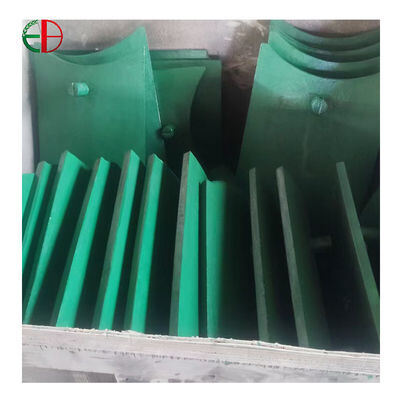
EB Castings reference photograph of cast hopper wear liner plates packed for handling
Hopper wear liner reference photograph from the EB Castings product range. Panel shapes and mounting details are selected for the installation drawing.
Product Specifications
  • Product type: Replaceable hopper sidewall liner panel
  • Material family: High chromium white cast iron
  • Alloy grade: Specified for the material flow and operating duty
  • Panel outline: To hopper wall layout and approved drawing
  • Thickness: To wear allowance and installation requirements
  • Mounting details: Drawing-defined holes, seats and edge clearances
  • Heat treatment: According to the selected alloy specification
  • Inspection focus: Panel dimensions, mounting fit and agreed material checks
Replaceable Protection for Hopper Wall Surfaces
Custom hopper sidewall liners provide a replaceable wear surface between abrasive bulk material and the supporting hopper structure. EB Castings supplies high chromium cast iron liner panels for drawing-based replacement and new equipment projects. This product focuses on the sidewall panel arrangement, including the outline, mounting features and transitions between adjacent liners.
A hopper rarely wears evenly across every surface. The incoming material path, discharge pattern and local changes in direction can create different wear conditions within the same unit. Dividing the lining into clearly identified panels allows the installation to be specified around these locations and gives maintenance teams a practical reference when inspecting or ordering replacement sections.
High Chromium White Iron for Abrasive Contact
High chromium white cast iron is a wear-resistant material family used where abrasive particles act against a metal surface. Its structure combines hard carbides with a metallic matrix; alloy composition and heat treatment influence the resulting balance of properties. The specific grade should be selected for the conveyed material and the actual contact conditions within the hopper.
Sliding abrasion and severe impact are different duties. Particle size, drop height, feed direction and foreign objects can affect the suitability of a particular liner design. Where a sidewall also receives direct impact, the material and mounting arrangement should be reviewed for that combined duty instead of selecting solely by a hardness figure.
Panel Layout Designed Around the Hopper
A useful liner drawing identifies each panel position and shows how the pieces meet at corners, seams and discharge transitions. The outline must suit the hopper wall, while thickness and any local profile need to fit the available space. Clearance around the panel edges helps distinguish the intended installation gap from an unexpected mismatch during assembly.
Direction of material travel deserves particular attention at adjoining edges. An exposed step or incorrectly oriented joint can change local contact and create a concentrated wear area. Mapping the panels against the flow direction helps the project team evaluate these transitions and maintain the intended internal profile after worn sections are replaced.
Mounting Details and Replacement Access
Fastener positions, hole forms and bearing seats must correspond to the supporting structure and selected attachment method. The panel should be evaluated together with the backing surface and hardware, because an apparently minor mismatch can affect seating or make installation difficult. Any requirement for recessed fasteners or protected attachment areas belongs on the approved drawing.
Replacement planning should also consider how a panel will be reached and removed. Panel identification, orientation marks specified on the drawing, and a clear assembly map can simplify maintenance preparation. When ordering a partial set, identify the exact wall position and neighboring panel references so that a similar-looking component is not substituted for the required piece.
Inspection and Operating Feedback
Dimensional inspection can focus on the outer profile, thickness, mounting-hole positions and seating features. Material verification and hardness testing, where required, should follow the selected grade and agreed acceptance requirements. Keeping inspection records associated with the panel reference supports traceability across later replacement orders.
Operating feedback is equally valuable. Photographs that show wear direction, remaining profile and the location of damaged fastener areas provide more useful information than a service-time figure alone. Include the handled material, flow path and relevant operating changes when reviewing a liner that wore unexpectedly.
Plan the Next Replacement with EB Castings
Send the hopper panel layout, individual drawings, attachment details and material-handling conditions for a tailored quotation. A clearly mapped lining system makes each replacement easier to identify and gives the next set of sidewall liners a defined installation target.
Products
PRODUCTS DETAILS
Custom High Chromium Cast Iron Hopper Sidewall Liners
Price: Quotation based on drawing and quantity
Delivery Period: To be confirmed in the quotation
Detail Information
Place of Origin
China
Brand Name
EB
Model Number
Custom to approved drawing
Material:
High Chromium White Cast Iron
Price:
Quotation based on drawing and quantity
Delivery Time:
To be confirmed in the quotation
Highlight

high chromium cast iron liners

,

custom hopper sidewall liners

,

wear resistant cast iron liners

Product Description
Custom High Chromium Cast Iron Hopper Sidewall Liners
EB Castings reference photograph of cast hopper wear liner plates packed for handling
Hopper wear liner reference photograph from the EB Castings product range. Panel shapes and mounting details are selected for the installation drawing.
Product Specifications
  • Product type: Replaceable hopper sidewall liner panel
  • Material family: High chromium white cast iron
  • Alloy grade: Specified for the material flow and operating duty
  • Panel outline: To hopper wall layout and approved drawing
  • Thickness: To wear allowance and installation requirements
  • Mounting details: Drawing-defined holes, seats and edge clearances
  • Heat treatment: According to the selected alloy specification
  • Inspection focus: Panel dimensions, mounting fit and agreed material checks
Replaceable Protection for Hopper Wall Surfaces
Custom hopper sidewall liners provide a replaceable wear surface between abrasive bulk material and the supporting hopper structure. EB Castings supplies high chromium cast iron liner panels for drawing-based replacement and new equipment projects. This product focuses on the sidewall panel arrangement, including the outline, mounting features and transitions between adjacent liners.
A hopper rarely wears evenly across every surface. The incoming material path, discharge pattern and local changes in direction can create different wear conditions within the same unit. Dividing the lining into clearly identified panels allows the installation to be specified around these locations and gives maintenance teams a practical reference when inspecting or ordering replacement sections.
High Chromium White Iron for Abrasive Contact
High chromium white cast iron is a wear-resistant material family used where abrasive particles act against a metal surface. Its structure combines hard carbides with a metallic matrix; alloy composition and heat treatment influence the resulting balance of properties. The specific grade should be selected for the conveyed material and the actual contact conditions within the hopper.
Sliding abrasion and severe impact are different duties. Particle size, drop height, feed direction and foreign objects can affect the suitability of a particular liner design. Where a sidewall also receives direct impact, the material and mounting arrangement should be reviewed for that combined duty instead of selecting solely by a hardness figure.
Panel Layout Designed Around the Hopper
A useful liner drawing identifies each panel position and shows how the pieces meet at corners, seams and discharge transitions. The outline must suit the hopper wall, while thickness and any local profile need to fit the available space. Clearance around the panel edges helps distinguish the intended installation gap from an unexpected mismatch during assembly.
Direction of material travel deserves particular attention at adjoining edges. An exposed step or incorrectly oriented joint can change local contact and create a concentrated wear area. Mapping the panels against the flow direction helps the project team evaluate these transitions and maintain the intended internal profile after worn sections are replaced.
Mounting Details and Replacement Access
Fastener positions, hole forms and bearing seats must correspond to the supporting structure and selected attachment method. The panel should be evaluated together with the backing surface and hardware, because an apparently minor mismatch can affect seating or make installation difficult. Any requirement for recessed fasteners or protected attachment areas belongs on the approved drawing.
Replacement planning should also consider how a panel will be reached and removed. Panel identification, orientation marks specified on the drawing, and a clear assembly map can simplify maintenance preparation. When ordering a partial set, identify the exact wall position and neighboring panel references so that a similar-looking component is not substituted for the required piece.
Inspection and Operating Feedback
Dimensional inspection can focus on the outer profile, thickness, mounting-hole positions and seating features. Material verification and hardness testing, where required, should follow the selected grade and agreed acceptance requirements. Keeping inspection records associated with the panel reference supports traceability across later replacement orders.
Operating feedback is equally valuable. Photographs that show wear direction, remaining profile and the location of damaged fastener areas provide more useful information than a service-time figure alone. Include the handled material, flow path and relevant operating changes when reviewing a liner that wore unexpectedly.
Plan the Next Replacement with EB Castings
Send the hopper panel layout, individual drawings, attachment details and material-handling conditions for a tailored quotation. A clearly mapped lining system makes each replacement easier to identify and gives the next set of sidewall liners a defined installation target.
sitemap |  Privacy Policy | China Good Quality Nickel Alloy Casting Supplier. Copyright © 2018-2026 Eternal Bliss Alloy Casting & Forging Co.,LTD. . All Rights Reserved.